Shifts in Unified Player Databases Supporting Fraud Prevention Across Interstate Online Casino Operations
Written by Taylor Walter · Sep 4, 2026
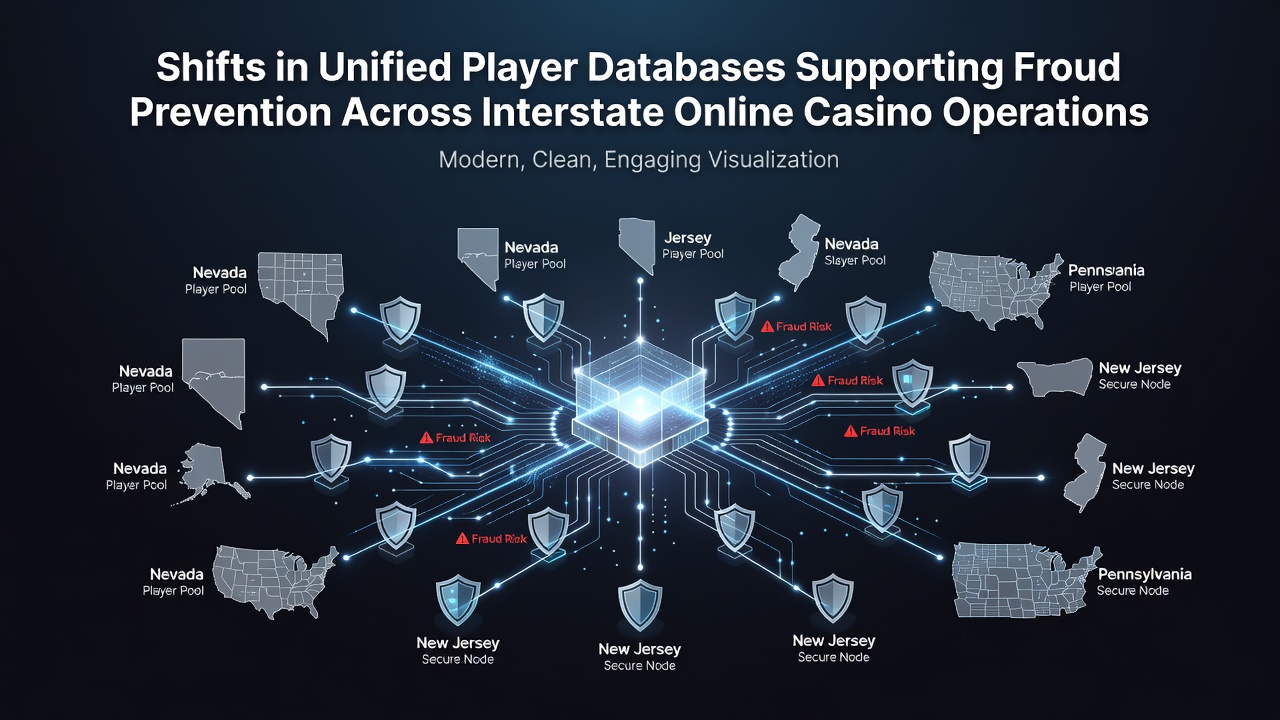
Shifts in Unified Player Databases Supporting Fraud Prevention Across Interstate Online Casino Operations
Operators across regulated US markets have expanded unified player databases to monitor activity spanning multiple states and this integration allows real-time cross-referencing of player identities, transaction histories, and behavioral patterns that previously remained siloed within individual platforms.
Data from state gaming commissions shows that these centralized systems flag duplicate accounts and irregular deposit patterns more quickly because they pull information from New Jersey, Pennsylvania, Michigan, and other jurisdictions into a single view while maintaining compliance with each locale's privacy rules.
Expansion of Interstate Data Sharing Frameworks
States participating in multi-jurisdictional compacts have updated their technical standards since early 2025, requiring licensed operators to feed anonymized player records into shared repositories that support fraud detection algorithms. These repositories connect geolocation logs with account creation timestamps and withdrawal requests so analysts can identify coordinated attempts to circumvent self-exclusion lists or bonus restrictions across borders.
September 2026 marked the rollout of enhanced API protocols between several East Coast gaming control boards, enabling faster data synchronization without exposing personally identifiable information beyond what each state's statute permits. Observers note that the number of flagged multi-state collusion cases rose during the first quarter of implementation compared with prior periods when databases operated independently.
Technical Mechanisms Behind Fraud Reduction
Unified databases employ machine learning models trained on historical fraud events to score new accounts in real time, combining signals such as device fingerprinting, IP address clustering, and payment method reuse. When a player attempts to open accounts in two states within minutes using similar credentials, the system generates an alert that triggers manual review or automatic blocking before funds move.
Payment processors integrated with these platforms report fewer chargeback disputes because mismatched identities surface earlier in the verification pipeline. Researchers at academic centers studying digital gambling markets have documented that states adopting unified verification experienced measurable drops in synthetic identity schemes that once exploited gaps between separate regulatory environments.

One operator consortium in the Midwest documented how linking player ledgers across state lines reduced instances of bonus abuse by connecting gameplay data from slots in one jurisdiction with sports wagering activity in another. The combined dataset revealed patterns where individuals rotated through promotions faster than single-state monitoring could detect.
Regulatory and Privacy Considerations in Shared Systems
State regulators continue to refine data governance agreements that specify which fields operators must share and which remain restricted to protect player confidentiality. These agreements reference frameworks developed by organizations such as the American Gaming Association and draw on technical guidance from Canadian provincial regulators that have operated similar cross-border data exchanges for years.
Compliance teams conduct regular audits to verify that encryption standards and access controls meet the strictest requirements among participating states. When discrepancies appear between two jurisdictions' retention policies, the stricter rule typically governs the shared record to avoid conflicts during enforcement actions.
Impact on Player Experience and Operational Efficiency
Players who move between states with compatible licensing now encounter smoother account portability because unified databases confirm identity once and reuse verified details across platforms. This reduces repeated KYC submissions yet still allows each operator to apply its own responsible gaming tools based on aggregated risk scores.
Support staff report shorter resolution times for dispute cases since complete transaction histories from multiple sites appear in one interface. Industry reports indicate that the administrative overhead of maintaining separate databases has declined in markets where unification reached full operational status by mid-2026.
Conclusion
Unified player databases continue to evolve as more states authorize online casino operations and seek coordinated approaches to fraud prevention. The technical and regulatory infrastructure supporting these systems has produced measurable improvements in detection speed and cross-jurisdictional visibility while preserving each market's distinct oversight requirements. Continued refinement of data standards and security protocols will determine how broadly these benefits extend as additional regions enter the regulated interstate landscape.